Tampa’s skyline continues to change, with high-rise condominiums, hotels, office buildings, mixed-use developments and parking structures found throughout Downtown Tampa, Water Street, Channelside, Westshore and the surrounding Tampa Bay area. Many of these types of structures may use post tensioned concrete to create strong, efficient slabs with longer spans and fewer supporting columns.
That design flexibility is valuable during construction, but it creates an important consideration when a building is later renovated: contractors need to know where the post tension cables are located before cutting, coring, drilling or anchoring into the concrete.
Post tension cable locating in Tampa helps contractors, engineers and property managers evaluate proposed work areas before the concrete is penetrated. Using Ground Penetrating Radar technology, MD Concrete Imaging can identify and mark the locations of post tension cables and other embedded objects that may affect the project.
What Are Post Tension Cables?
Post tension cables, also called tendons, are high-strength steel strands installed within concrete. After the concrete reaches the required strength, the tendons are tensioned to place the concrete under compression.
This construction method can allow for longer spans, thinner slabs and more flexible interior layouts. For those reasons, post tensioned concrete is commonly associated with structures such as:
High-rise condominiums and apartment buildings
Hotels and mixed-use developments
Office buildings
Parking garages
Large commercial properties
Other structures designed with long, open spans
Because the tendons are part of the structural system and remain under tension, their locations must be carefully considered whenever someone plans to penetrate the slab.
Why Post Tension Cable Locating Matters
A concrete surface does not show what is embedded inside it. A proposed drill point may appear clear from above even when a post tension cable, rebar or electrical conduit passes directly beneath it.
Accidentally damaging a post tension cable can create safety concerns, affect the structure and lead to unplanned evaluation, repair costs and project delays. The issue can become even more disruptive in an occupied Tampa condominium, hotel, office building or parking garage where construction work must be coordinated around residents, guests, employees or vehicles.
Locating the tendons before work begins gives the project team information it can use when reviewing proposed penetration locations. If a conflict is identified, the drilling or cutting location may need to be adjusted in consultation with the appropriate contractor, engineer or design professional.
Tampa Projects That May Require Post Tension Cable Scanning
Post tension cable locating is not limited to major structural renovations. Many routine building upgrades require contractors to drill, cut or anchor into an existing concrete slab.
Plumbing and Drain Installation
Hotel, condominium, restaurant and multifamily renovations often require new plumbing penetrations. Moving a sink, adding a drain or rerouting a pipe may involve core drilling through a concrete floor. Scanning can help identify post tension cables and other embedded objects near the proposed core locations.
Electrical and Data Upgrades
New electrical service, lighting, security equipment and data systems may require penetrations or anchors in concrete floors, walls and ceilings. GPR scanning can help locate tendons, rebar and conduits before installation begins.
Balcony and Railing Work
Balcony renovations, railing replacements and exterior improvements may require drilling into concrete. Before new anchors are installed, scanning can help the project team understand what is present within the intended work area.
Parking Garage Improvements
Post tensioned concrete is frequently used in parking structures. Projects involving lighting, signage, security systems, vehicle-charging equipment, drainage improvements or structural repairs may all require drilling or anchoring into the concrete.
Tenant Buildouts and Interior Renovations
When an office, retail space or restaurant is reconfigured, the new layout may not align with the building’s original plumbing, electrical or mechanical systems. Concrete scanning allows contractors to evaluate the proposed work areas before creating new penetrations.
How GPR Helps Locate Post Tension Cables
Ground Penetrating Radar, commonly called GPR, is a non-destructive technology used to evaluate concrete. The equipment sends electromagnetic signals into the concrete and records reflections created by embedded materials and changes within the slab.
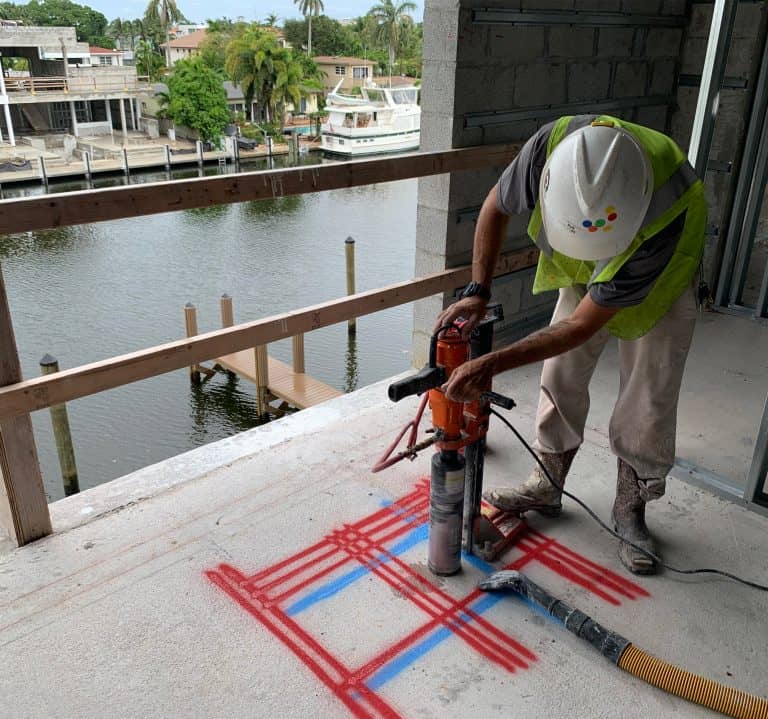
A trained technician interprets those reflections to identify the position and approximate depth of post tension cables, rebar, conduits and other detectable objects. Findings can then be marked on the concrete surface to help the project team visualize where embedded materials are located in relation to the proposed work.
GPR offers several practical advantages for Tampa renovation projects:
It does not require exploratory cutting or drilling.
Results can be interpreted during the site visit.
It can often be performed with access to one side of the concrete.
It can locate more than post tension cables within the same work area.
Surface markings can assist with planning proposed penetrations.
GPR results depend on the concrete, site access, object spacing and other field conditions. Scanning provides valuable information, but decisions involving structural elements should be made by the appropriate qualified professionals.
Why Building Plans May Not Be Enough
Original drawings and as-built documents are useful, but they should not automatically be treated as a precise map of every tendon in the field. Plans may be unavailable, outdated or different from actual construction conditions. Previous renovations may also have changed the building since the drawings were created.
Even when structural plans are available, they may show a typical tendon layout rather than the exact position of every cable at a specific proposed drill point.
Concrete scanning evaluates the physical work area. Comparing current scan findings with the project drawings gives contractors and design professionals more information than relying on either source alone.
When to Schedule Post Tension Cable Locating
Scanning should be arranged before any cutting, coring, drilling or anchoring begins. Whenever possible, schedule the scan early enough to allow the project team to revise the penetration layout if an obstruction is detected.
Before the technician arrives, it is helpful to identify:
The number of proposed penetrations
The intended diameter or size of each opening
The approximate drilling or cutting locations
Whether the work is on a floor, wall, ceiling, balcony or column
Which side of the concrete is accessible
The thickness of the slab, if known
Any available structural drawings
Site access, parking and working-hour requirements
The work area should also be accessible so the technician can move the GPR equipment across the surface. Clear project information helps define the scanning area and supports better coordination with the crews completing the work.
Coordinating Scanning and Core Drilling in Tampa
On many projects, scanning is only the first part of the job. Once the embedded objects have been located and the penetration points have been reviewed, the concrete may still need to be cut or core drilled.
MD Concrete Imaging provides GPR scanning, concrete cutting and core drilling. Coordinating these related services through one company can help reduce scheduling gaps and maintain continuity between the scan markings and the work that follows.
This can be particularly helpful for Tampa commercial renovations, hotel improvements, condominium projects and parking garage upgrades where access windows may be limited and several trades are working within the same schedule.
Serving Tampa and the Surrounding Area
MD Concrete Imaging provides post tension cable locating and concrete scanning for projects throughout Tampa and nearby Tampa Bay communities, including Brandon, Riverview, Temple Terrace, Plant City, Clearwater, St. Petersburg and Wesley Chapel.
Our team works with contractors, engineers, property managers and building professionals to locate post-tension cables, rebar, conduits and slab thickness in concrete slabs, walls, balconies and columns.
Call Before You Cut, Core or Drill
Before cutting, coring, drilling or anchoring into a post tensioned concrete surface, take the time to locate the tendons and other embedded objects within the work area.
For post tension cable locating, concrete scanning or core drilling in Tampa, contact MD Concrete Imaging at 813-752-3600 or 888-917-4488 to discuss your project.